
Okay, so check this out—I’ve been knee-deep in crypto exchanges for years, and OKX keeps showing up as the platform that both delights and occasionally frustrates seasoned traders. Whoa! The interface is slick. But there’s more under the hood than pretty charts and dark mode; the futures ecosystem here is robust, and the account mechanics matter if you want to survive a volatile week. My instinct said “this is simple,” and then reality reminded me otherwise.
Here’s the thing. At first glance OKX looks like every other exchange: wallet, markets, margin, derivatives. Hmm… that’s the surface. Initially I thought fees were the headline story, but then I realized: it’s the combination of leverage options, margin modes, and risk management tools that actually define your experience. Seriously? Yes. On one hand you get competitive maker/taker spreads; on the other, the default leverage settings can be risky if you’re not paying attention.
So how do you approach OKX futures as a US-based trader who wants both agility and safety? Start with the account. Create a dedicated email, enable two-factor authentication, and separate funds for spot vs. derivative play. I’m biased, but cold-storage discipline saved me from a dumb margin call once, so yeah—do that. Also, KYC will ask for ID. It’s annoying, but it’s part of the game now.
Short note: Wow! You’ll thank yourself later. Use sub-accounts if you trade multiple strategies—it’s very very helpful for keeping PnL tidy and for shifting collateral between spot and futures without mixing up positions. The transfer flow is simple once you get the hang of it, though the labels can be confusing at first (transfer, fund, margin, collateral—oh, and by the way… read the small text).
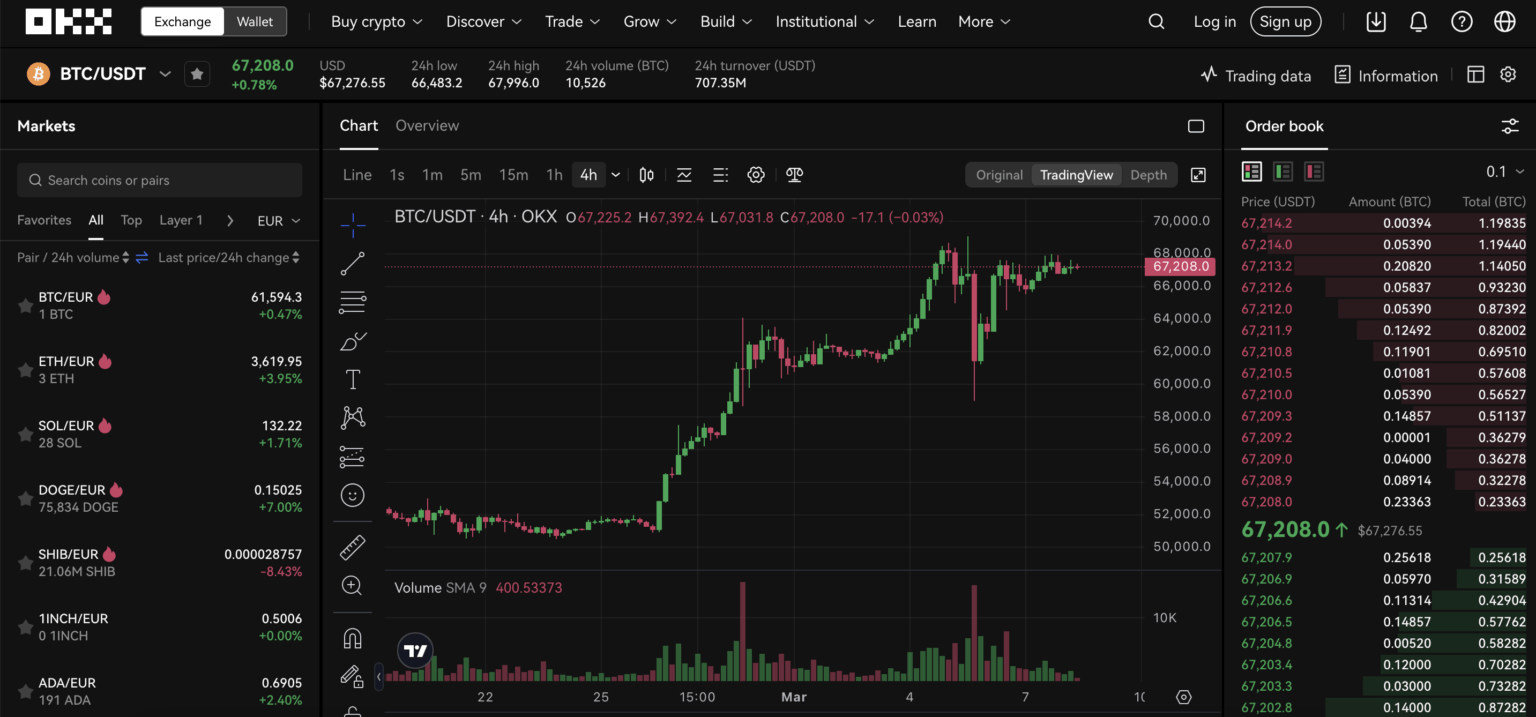
Logging in and Getting Started
If you’re ready to dive in, the first step is the okx login. Seriously, that’s the gateway—make sure you’re on the correct domain and not a phishing clone. My gut tells me that more traders get tripped up by sloppy login hygiene than by complex order types. Something felt off about one login flow I saw once, and that almost made me lose access—so double-check your email confirmations and 2FA backup codes.
Once you’re in, two settings will determine most of your futures life: margin mode and isolated vs. cross. Medium note: Isolated margin confines risk to a single position; cross margin shares collateral across positions. Initially I favored cross for flexibility, but then realized my entire account could be wiped by a single large move—so I switched strategies. Actually, wait—let me rephrase that: cross is great for hedging correlated positions, isolated is better for experimental trades.
Order types deserve a paragraph to themselves. Limit, market, stop-market, and conditional orders are standard. The conditional orders (stop loss / take profit combos) helped me sleep through a few awful nights. Long story short: learn the difference between stop-market and stop-limit. On the futures side you’ll also see reduce-only flags and post-only options—those keep your execution predictable.
Leverage. Whoa! Use leverage like you use hot sauce—sparingly. OKX offers up to high leverage on certain contracts, but higher leverage compresses your margin cushion and increases liquidation risk. Manage leverage with position sizing first, then pick leverage. My experience: a modest leverage + strong risk rules outperforms reckless high leverage most of the time.
Funding rates and perpetual swaps are another piece. They sound academic, but funding payments can flip your PnL if you hold long-term. If you don’t understand how the funding rate is calculated—or when it spikes—you’re really flying blind. (I got burned once on a funding rate spike that erased a week’s gains.)
APIs and automation—oh man, this is where OKX shines for active traders. Their API supports margin, futures, and sub-account management. It’s fairly robust. On the other hand, API keys are also an attack vector. Keep your keys restricted to IPs if possible, and avoid giving withdrawal permissions unless absolutely necessary. I’m not 100% sure about every nuance of their API throttling, but for strategy execution it’s plenty capable.
Risk management culture: this part bugs me. Too many traders treat platform features as a substitute for discipline. Use stop losses as defaults. Stress-test your positions for 5%-10%-20% moves. Really. Backtest and forward-test with small sizes. I still run a paper strategy for weeks before scaling up, and that practice has saved me from some ugly margin calls.
Regulatory context for US traders—brief but crucial. US regulation keeps shifting. Some derivative products have regional restrictions. So check what’s allowed in your state. OKX has adapted over time, but you might run into feature limitations depending on jurisdiction. If you’re trading from the US, keep an eye on support notices and policy updates; they matter for account permissions and withdrawal lanes.
Pro tip: Use sub-accounts to segregate strategies, and label them with obvious names like “swing_long_v1” or “stat_arb_alpha” so you don’t mix funds. It sounds trivial, but I once had two strategies use the same collateral and the reconciliation was a nightmare. Small operational hygiene fixes yield big returns on stress reduction.
FAQ — Quick Answers for Common OKX Futures Questions
How do I avoid being liquidated on OKX futures?
Size positions conservatively, use isolated margin for risky trades, set realistic stop-losses, and monitor maintenance margin. Also watch funding rates and avoid max leverage unless you have a proven edge.
Can I move funds between spot and futures instantly?
Yes, transfers within OKX are fast, but moving to external wallets takes longer and depends on network congestion. Use internal transfers to fund futures quickly, and remember that some collateral conversions (like between stablecoins and margin currency) can affect available leverage.
Is OKX safe for long-term traders?
Generally yes—OKX has solid infra, insurance reserves, and a mature futures engine. But platform safety is only part of the equation; your operational security (2FA, API key management, email hygiene) and risk strategy are just as important.
Alright—final thought: if you’re serious about futures, treat OKX like a toolkit, not an autopilot. You’ll find features that feel tailor-made for algorithmic desks and solo traders alike. I’m leaning enthusiastic now, though cautious. There’s still a learning curve, and somethin’ will always surprise you, but that’s part of why trading keeps you honest.
Go in with respect for risk, and use the platform’s features to automate protections rather than replace them. Good luck out there—stay sharp, and keep your backups somewhere safe…

Author: Deepali Tiwari
Deepali Tiwari is a skilled Full Stack BI Developer with 3 years of experience in designing and enhancing business intelligence solutions. At Orange Data Tech, she leverages her expertise in both front-end and back-end technologies to develop intuitive, data-driven applications that help businesses make informed decisions. With a strong foundation in BI tools, data modeling, and analytics, Deepali is committed to delivering high-performance solutions that drive operational efficiency and strategic growth.